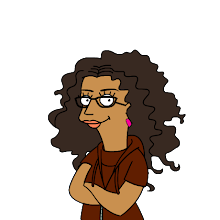
Lately, I started to suspect that there are more babies per capita in this country that there are in Canada. Maybe it’s something about the wars (history showed that people procreate more in wartime and Israel is in a state of constant wartime,) maybe it’s the subconscious fear of being outnumbered by the enemy. Whatever the reason may be, it can make life for a 34 year old babyless woman a living hell.
Ok, to be fair, it could be also because most of my close friends in Canada are younger than me, and that I live away from my huge family (‘a family the size of a small European country’, I wrote once) and their many children. Also, even in Vancouver the trend is beginning to shift, and right now I have three friends (not in my closest circle still!) that are pregnant.
But in Israel it is a sweeping epidemic. Babies are everywhere, and of course they are adorable and so much fun to have around. I have 7 incredible nieces and nephews and one on the way.My many cousins have been having babies for years now, (I think – scary thought – that I’m the oldest female cousin at this moment who still hasn’t bred!!) My friend Tal is expecting a second, my friend Doron has a 6 month old baby, my friend Tsachi just got married and isn’t wasting any time. Every time I meet someone from the past I discover that they have offspring. I have only three friends without babies. One of them just turned 30 so she doesn’t count, the other is a lesbian who recently announced that she intends on marrying at 50 and having babies at 70 (to her girlfriend’s dismay) and the third is my childhood friend, Michal, who just like me, is simply not ready yet. Thank god for her.
But I think the main difference is that in Canada, I get most of my harassment (yes, let’s call it by its name: harassment) from the Indian staff at Yogi’s kitchen, and annoying as it may be, it doesn't happen often enough to make me mad. But in Israel, let me tell you, it is not harassment. It is a crusade.
I made the mistake, while visiting some family on a Saturday morning, of getting myself into a trap I should have recognized from miles away. It started innocently enough, with questions about my boyfriend (should have seen the flashing DANGER signs) and then one of the women asks: “So when are the bells going to ring?”
I instantly tense. “I don’t know,” I say, avoiding eye contact.
“Whatever,” my cousin who’s 45 and has 5 children, interferes. “Who cares about that? Just have a child. You don’t have to get married.”
Now that’s new. I’ve only been hearing it for the past couple years. Suddenly tradition is no longer a priority. Not in comparison to baby making, anyways. You gotta choose your battles. And especially in a case like mine, when a Jewish wedding is out of the question (so why bother?) and my clock is rapidly ticking (oh, how they love to talk about that clock,) wasting precious time on wedding preparation would just be foolish. Better get down to business! Start popping them before it’s too late! What, you think you’re so special that you can just go about life without fulfilling your role as a woman? You think you’re better than us? That your calling is different than ours? And what the hell is wrong with you anyways? What kind of woman your age doesn’t want babies? Why exactly do you need convincing?
“Later,” I say, like I’m declining an offer for lunch because I have previous engagements. “I’m really busy right now. I’m writing a book.”
“So???” my cousin yells, clearly not impressed with my literary aspiration. “You think you can’t write with a belly?”
Actually, it’s not the belly I worry about, I want to say. It’s the screaming helpless child who’d need my full love and attention. Yes, I think that might interfere with my writing time. But I say nothing and start rubbing an imaginary stain on my pants.
“How old are you?” My other cousin’s wife asks the dreadful question.
“34,” I say. I give her my age the way we do it in Canada, staying 34 until the minute I turn 35, even though I know that according to Israelis I’m pretty much 35 now, because my birthday is in two and half months.
She looks me up and down, but instead of saying: “Wow, you don’t look a day over 30!” she says: “So, it’s about time. You’re not a kid anymore.”
Now I’m offended. What did I ever do to her? That’s not a very nice thing to say! Sure I’m still a kid! Yes, I know my mom had 5 children at 34, but none of my siblings had children at my age. They were all late bloomers. In fact, my sister, who just had her first baby, is going to be 42 this summer, and by the way, at her heart she’s still a kid too! Ask anybody who ever played pillow fights with her!
I’m starting to look for an escape route. Did it just get hot in the room? My cousin’s daughter, who is in the room watching TV, looks up at me and smiles. Is it pity?
My cousin suddenly softens and laughs. “Look at her,” she says, “all she thinks is: shutupshutupshutupshutup.”
I smile tightly. She’s bang on, of course.
“Yes,” my aunt says, “I have a friend whose daughter a bit older and she stopped coming to family dinners because they harass her so much.”
“How old is she?” I ask.
“30,” my aunt says.
“That’s older???”
“Well, you know,” my aunt spit a list of clichés that should be outlawed. The clock is ticking. When I’d want to have one I wouldn’t be able to. I find myself imagining committing horrible crimes against those women I love dearly. Suddenly they’re the enemy. I see it in their eyes. There’s a new look in there. It’s as if they don’t like me as much as they used to. Because I’m a horrible daughter to my mother who wants nothing but grandchildren. Because I’m too indulgent, selfish, lazy. Because they no longer understand me.
This happens to me a lot in Israel. A lot more than I care to admit to Sean. And there’s milder harassment, coming from girlfriends (both in Israel and in Canada) who tell me they don’t really believe that I don’t want children right now. They think I secretly want a child but for some weird reason deny it from myself. ‘When you’ll see your sister’s daughter,’ they say, ‘you’d want one for yourself.’ They are probably just projecting but still, it’s slightly insulting - because do they think I am that out of touch with myself? - and really tiring. When did my uterus become a public domain? A topic of discussion?
You want the awful truth? Are you ready for it? I don’t want children right now. I just don’t. I saw my sister’s daughter and I love her like only an aunt can, and she’s wonderful and amazing and still – she didn’t make me want one of my own. I love the children around me. It’s a joy to have them around. I just don’t want my own yet. I never dream about babies. I’ve never had a pregnant dreams. When I think about having a baby, I actually cringe a little bit.
I’m not saying I’d never want children. I might want them next year. I think about that a lot. At my age it would be stupid to not think about it. And I’m clearly aware of the fucking clock. It ticks loud and clear it’s kind’a hard to miss. And my friends and siblings have nothing but wonderful things to say about having children. It changed their lives. They are happy. It seems like it would be a shame not to experience that. But that’s not much of a reason to have babies. It would also be a shame to not go skydiving, and don’t get me wrong - of course I’m not comparing the two. I’m just pointing out the way my mind works right now. I’m pointing out the lack of deep yearning that most new mothers talk about.
I can’t help feeling the way I feel. I don’t think that makes me a bad person. I know I’m a minority amongst my age group, but just like every minority, I don’t deserve being harassed simply because I’m different.
Sunday, March 16, 2008

Thursday, March 13, 2008
That's NOT how it happened!
Yesterday I decided I need to get back to writing every day. This blog has been a great motivator, but I haven’t written anything related to my book since getting to Israel and I’m scared. I’m scared it will slip away from me. I’m scared it would never happen. Sometimes I wish I chose a different topic, that didn’t require so much study, that didn’t incorporate two genres, that didn’t pose a risk to my relationships.
The research was supposed to kick start my writing but in reality the more I research the less I feel I know. And every day I discover more versions of the truth, some that I never even heard before. If I had a penny for every ‘That’s not how it happened!’ and ‘Who told you that?’ I could have made a hefty donation to the Yemeni Jews Museum in Rosh Hayin, because God knows – they need it.
“I’m writing fiction,” I tell everyone I interview now. “It’s just based on the family history.” “I’m writing fiction,” I tell myself on the way there. “FICTION!” I think as I wake up. It’s my new mantra. It’s what keeps me going. It doesn’t matter that I’m writing about something that happened 90 years ago in Yemen and who ever knew the truth is long gone. It’s still a hot topic; still loaded with emotions. I’m writing fiction. Because otherwise, once the book is out I’ll to have to deal with a mob of family members, all running after me and screaming: “That’s not how it happened!!!” and “Who told you that?”
Maybe it would be easier for me to write this book in Canada, where I don’t have to see my family. Maybe I should concentrate on my research and not worry about the writing until then. When I’m back at my desk in Vancouver facing the Burnaby hills, sitting on my ergonomic chair and sipping a cup of Continental coffee I’ll write this story without being so concerned with people’s feelings, without battling guilt and fear – those nasty censors. I’d be able to write this story without feeling as if I’m carrying an entire community of people on my shoulders, and since I haven’t been practicing my yoga – I doubt my shoulders can carry that much weight.
The research was supposed to kick start my writing but in reality the more I research the less I feel I know. And every day I discover more versions of the truth, some that I never even heard before. If I had a penny for every ‘That’s not how it happened!’ and ‘Who told you that?’ I could have made a hefty donation to the Yemeni Jews Museum in Rosh Hayin, because God knows – they need it.
“I’m writing fiction,” I tell everyone I interview now. “It’s just based on the family history.” “I’m writing fiction,” I tell myself on the way there. “FICTION!” I think as I wake up. It’s my new mantra. It’s what keeps me going. It doesn’t matter that I’m writing about something that happened 90 years ago in Yemen and who ever knew the truth is long gone. It’s still a hot topic; still loaded with emotions. I’m writing fiction. Because otherwise, once the book is out I’ll to have to deal with a mob of family members, all running after me and screaming: “That’s not how it happened!!!” and “Who told you that?”
Maybe it would be easier for me to write this book in Canada, where I don’t have to see my family. Maybe I should concentrate on my research and not worry about the writing until then. When I’m back at my desk in Vancouver facing the Burnaby hills, sitting on my ergonomic chair and sipping a cup of Continental coffee I’ll write this story without being so concerned with people’s feelings, without battling guilt and fear – those nasty censors. I’d be able to write this story without feeling as if I’m carrying an entire community of people on my shoulders, and since I haven’t been practicing my yoga – I doubt my shoulders can carry that much weight.
Wednesday, March 12, 2008
The Iraqi
Avram Hairaqi died yesterday. Hairaqi was not his last name, but that’s the name everyone knew him by. For many years I didn’t even know he had a family name. Hairaqi means The Iraqi. Israelis of that generation did that a lot, name people by their place of origin. And in my mom’s ‘hevre’ (a Hebrew word describing a group of friends, and in this case a regular group of friends who meet at least once a week to play cards, crack nuts and seeds, eat fresh watermelon with salted cheese, drink black coffee or beer and chat) he was an anomaly. Most of my mom’s friends growing up were Yemenis or her siblings – who were, obviously, also Yemenis. And there was Avram Hairaqi, often just called ‘Hairaqi’. His wife, Shosi was known as ‘hairaqit,’ and together they were ‘haIraqim.’ When he called, my mom’s cell phone read: ‘The Iraqi’. It was also a way to distinguish him from another Avram, my mom’s brother.
Avram Hairaqi was born in Baghdad 68 years ago, and came to Israel as at 14 with his family. He met my mother in Sharia – the Yemeni neighbourhood where she grew up – and fell madly in love with her. She was two years younger than him and loved singing and playing the flute. Her father owned the first radio in the neighbourhood. She was beautiful, had almond shaped eyes and olive skin. “He wrote me such lovely letters.” My mom said, “But he was so shy! For the longest time he wouldn’t speak to me!” The teen crush had eventually fizzled and they became best friends. They stayed best friends for the next fifty years, as they both married their sweethearts – my mom a Yemeni and Avram an Iraqi – and raised families.
In a country where men are often loud and short tempered and like to call it passion and blame it on geography, Avram Hairaqi stood out in his serene and peaceful demeanor. He was a sweet man, soft spoken and good natured. Sometimes, when my mom hosted the card game in our living room, I could hear heated arguments erupt and men in the ‘hevre’ raising voices, but never Avram Hairaqi. He would smile forgivingly when he saw me peeking from the top of the stairs. He always showed in interest in my siblings and me and was a good friend to my parents. The Iraqim were also a great support to my family after my father’s death.
I wasn’t at the funeral. He died at 2 and by 7 they already buried him. Jews don’t waste time bringing a soul closer to home. It’s considered disrespectful to the dead to keep him in limbo. I was working at the time and had to miss it. I want to pay him my respects, and if I could say something to him I’d thank him for being the one person in my teenage years to keep telling me that I was beautiful. Correction: he never told me that to my face, just to my mom while I was in the room, as if it was a compliment to her, more than it was to me. I was in that awkward phase, long limbed and with a permanent miserable expression. I hated my looks with great passion. I didn’t have a boyfriend, rarely dated and made a habit of developing ridiculous crushes on boys who didn’t know I existed. My taste evolved from blond-prom-king surfer-types in junior high to brown-skinned-skateboarder-hippy-bad-boys by the time I reached high school. Both types always ended up going for girls who were much prettier than I was. I remember writing in my diary that the only person apart from my mom and my two best friends who think I’m beautiful (all clearly biased) is Avram Hairaqi. ‘He must be out of his mind,’ I concluded. The thing is: I could tell he really meant it. He saw through the slouched gate and clumsiness, the bad skin and chewed down nails.
It’s not much of a eulogy, I know. I could probably be accused of being self centred at a time of such grief. It might not seem like much, but this is what I remember, and for an insecure 16 year old girl this was a matter of top priority. That sweet man made a huge difference to my self esteem. I think he would have liked to know that.
Avram Hairaqi was born in Baghdad 68 years ago, and came to Israel as at 14 with his family. He met my mother in Sharia – the Yemeni neighbourhood where she grew up – and fell madly in love with her. She was two years younger than him and loved singing and playing the flute. Her father owned the first radio in the neighbourhood. She was beautiful, had almond shaped eyes and olive skin. “He wrote me such lovely letters.” My mom said, “But he was so shy! For the longest time he wouldn’t speak to me!” The teen crush had eventually fizzled and they became best friends. They stayed best friends for the next fifty years, as they both married their sweethearts – my mom a Yemeni and Avram an Iraqi – and raised families.
In a country where men are often loud and short tempered and like to call it passion and blame it on geography, Avram Hairaqi stood out in his serene and peaceful demeanor. He was a sweet man, soft spoken and good natured. Sometimes, when my mom hosted the card game in our living room, I could hear heated arguments erupt and men in the ‘hevre’ raising voices, but never Avram Hairaqi. He would smile forgivingly when he saw me peeking from the top of the stairs. He always showed in interest in my siblings and me and was a good friend to my parents. The Iraqim were also a great support to my family after my father’s death.
I wasn’t at the funeral. He died at 2 and by 7 they already buried him. Jews don’t waste time bringing a soul closer to home. It’s considered disrespectful to the dead to keep him in limbo. I was working at the time and had to miss it. I want to pay him my respects, and if I could say something to him I’d thank him for being the one person in my teenage years to keep telling me that I was beautiful. Correction: he never told me that to my face, just to my mom while I was in the room, as if it was a compliment to her, more than it was to me. I was in that awkward phase, long limbed and with a permanent miserable expression. I hated my looks with great passion. I didn’t have a boyfriend, rarely dated and made a habit of developing ridiculous crushes on boys who didn’t know I existed. My taste evolved from blond-prom-king surfer-types in junior high to brown-skinned-skateboarder-hippy-bad-boys by the time I reached high school. Both types always ended up going for girls who were much prettier than I was. I remember writing in my diary that the only person apart from my mom and my two best friends who think I’m beautiful (all clearly biased) is Avram Hairaqi. ‘He must be out of his mind,’ I concluded. The thing is: I could tell he really meant it. He saw through the slouched gate and clumsiness, the bad skin and chewed down nails.
It’s not much of a eulogy, I know. I could probably be accused of being self centred at a time of such grief. It might not seem like much, but this is what I remember, and for an insecure 16 year old girl this was a matter of top priority. That sweet man made a huge difference to my self esteem. I think he would have liked to know that.
Monday, March 10, 2008
Desert Living
I know, I know. I’m a rotten blogger. I keep my audience (read: Sean, my sister and two of my closest friends) hanging for days. I’m gonna have to steal my dear friend Eufemia’s excuse (not only do I neglect my readers but now I steal from other bloggers!) for not writing her blog from India: “a cow ate my blog!” She claimed. What would be an Israeli equivalent to that?  Hmmm. A street cat tore it to pieces? (they’re arguably more common in Tel Aviv than cows in India.)
Screw it.
I’m gonna tell the truth.
I’ve been really busy. There is simply not enough time in the day to read all the books and essays about Yemeni Jews, visit all the libraries and museums I must visit, interview everyone I need to interview, make some cash (cleaning houses and working at my brother’s office once a week) and still have time to enjoy a night out with friends, a family dinner, write, travel the country, exercise. I’m totally overwhelmed.
Then a few days ago rare heat wave came our way, all the way from Libya, or Algiers, or some other North African country who doesn’t talk to us, crossing impassable borders, seas and mountains and settling on the country like a heavy blanket. It’s not even spring yet and suddenly the temperatures rose up to 34 degrees in Tel Aviv. One day we were wearing jackets, the next flip flops and t-shirts.
So we figured it was too hot to do anything, packed the car and headed to Eilat.
Eilat is the southernmost city in Israel, bordering Egypt and Jordan. A desert city by the red sea, it’s a world class tourist destination, known for its marine park and coral reefs which makes it a scuba divers’ paradise. Red mountains soar around it, a striking contrast to the clear blue sea and the white sand beaches. Back when I lived in Israel, Eilat’s beaches were filled with topless Scandinavian tourists and dark skinned local boys who preyed on them. Today, for some reason, it’s packed with French and Russian tourists and they usually keep their tops on.
Eilat is Israel’s very own Vegas, minus the slot machines and with beaches, and like Vegas it is a manmade oasis in the desert, a strip lined with luxurious hotels and flashing neon.
I’ve always loved the drive to Eilat. Growing up, our small country felt like an island, surrounded with countries we weren’t allowed to enter. Eilat was as close as going abroad as you could get. It was four and half hours away from Tel Aviv, and in a country you could cross in two hours going east to west, and seven from north to south, it felt really far.
 The landscape changed quickly, leaving green and moist Tel Aviv to the dry and arid desert. The cities we crossed, Beer Sheva, Dimona, were sand castles in the horizon, even their trees appeared yellow, covered with the wandering sand. Past those cities, the desert grew mountainous, canyons and cliffs rose and fell, and the view from my window turned from yellow to blushing red. Eventually, at the end of a long dusty road along the Jordanian border, we could see Eilat, a little sparkling blue stain, surrounded with big hotels, monsters of concrete that are the stepchildren of the desert.
I have a soft spot for Eilat, a city that young hip Israelis love to hate because it’s overrun by ugly hotels and gaudy neon signs. I secretly like Eilat, and not just because of the gorgeous beaches and the beautiful Red Sea. I have a soft spot for it because once, when I was a teenager, it was my home away from home. When I was in high school, before I could travel outside of the country, I discovered that four and half hours on a night bus from Tel Aviv took me to a different land, with a different climate, where no one knew me, where I could reinvent myself. First I went with some girlfriends, slept in a sleeping bag on the beach and partied at night. Then the summer before twelfth grade, Tal – my best friend and also a teen journalist – and I were sent to write about a scuba diving course in Eilat. The diving club was on Coral Beach, a short bus ride away from the busy strip, and we spent all our days diving and sun tanning and all of our nights hanging out on the beach with our diving buddies.
The beach was overlooking the lit shore of Aqaba, Jordan’s Eilat. Local Eilati once told me how they used to see King Hussein’s boat sailing from Aqaba, approaching the territorial sea border between Jordan and Israel. The king would wave at the Israeli boats with his charming smile and then sail away. Tal and I sat there at night and looked at the water, hoping to see the King’s boat. It was a few years before Israel and Jordan signed a peace agreement. Today, Israelis can visit Aqaba, and look at the lit shore of Eilat from the other side.
I loved the diving club and I loved Eilat. I was intoxicated by the freedom, surrounded with tourists from around the world I could pretend to be a traveler myself, a tourist in my own country. I came back almost every holiday, and always stayed in the youth hostel by the diving school. I often went alone, because everybody already knew me. Handsome sun kissed diving instructors would flirt with me and buy me drinks. Sometimes I’d even miss school and go there for a couple days.
I used to love coming here in winters, when Tel Aviv’s streets were littered with puddles and the Mediterranean Sea was dreary and grey. Sean, who spent a winter here once, working on a boat, says that a typical winter in Eilat is generally better than a Vancouver summer. He also has a soft spot for Eilat. He lived here for an entire winter and it was the first time he worked on a boat. When we drive around Eilat we actually argue about directions and he has a say!
I have a soft spot for Eilat because I have many good memories from here. It was on a beach in Eilat, on a warm winter night, where I had my first kiss.
I was here with Tal the day the first gulf war officially began. We came for a scuba diving conference, accompanied by our gas masks, which we were ordered to take everywhere with us in case of a chemical attack by Iraq. I made mine into a collage because the ugly brown box didn’t go with my style. It was a good time to be in Eilat. An attack on Eilat was highly unlikely, since it was so far from Israel’s centre. The atmosphere at the diving club was almost high spirited. “Eat, drink and make love because tomorrow we’ll die!” The young instructors announced with a chilled beer in hand. Others said that if a chemical missile was to hit Eilat they would go underwater with a tank full of air. No need for gas masks or shelters! It was so relaxed that I didn’t want to go back; such a contrast to Tel Aviv where you breathed panic and fear. And sure enough, a day after our return, the first missile fell on our city. I pulled the straps on my gas mask so tightly that I had bruises on my chin the next day. I really wished I stayed in Eilat.
We arrived at Eilat before sunset. The red mountains bled onto the city. Lights dotted the hotels, and lined the seawall and the air smelled like cocoa butter. Red-faced tourists filled the bars, beer was poured and live music played on the sidewalks.
As soon as we stopped by a motel, hawkers surrounded our car like vultures, trying to get us to rent their suites. After seeing a couple of unappealing suites we took one that seemed decent. Only to discover as the hours passed, that the light in the bathroom is flickering erratically (“I’m gonna get a seizure!” I cried,) the door to the balcony doesn’t lock (“It’s like any other hotel,” the guy told me when I called, “you shouldn’t be leaving valuables in your room.”) The electric kettle didn’t work, the fridge was filthy, the remote didn’t work, and everything was covered in a layer of dust. None of it was apparent at a first look. You really shouldn’t judge by appearance.
We moved the next day to a nicer place and our vacation finally began.

Even though it’s been 18 years (how is that even possible??? I must have been a baby then) since my diving course I still always go back to the Coral Beach, to the same diving club. I don’t know where else to go. Located on the road to Egypt, it is far enough from the main strip and its tourist attractions to keep me sane. I’m always scared that next time I’ll come the place would be different. Of course it changed over the years: a nice hotel and a coffee shop with a terrace were built across the street, and the diving club now has a bar on the beach with wooden stools surrounding it, where they pour tap beer and make espressos. Still it remains a better alternative to Eilat’s hotel strip, especially since they built that huge mall at the entrance (which I admit, is a great air conditioned bubble for these insane summer days when the temperature reaches 45 degrees and you’d rather die than walk the streets. In fact, you might actually die if you did. I’ve only ever felt that feeling in Montreal, when the temperature went down to minus 40 and I realized that being out might actually kill me. That kind of danger in the air is something we rarely feel in temperate Vancouver, where the weather is always agreeable, never a silent killer.)
There’s only one diving instructor from my days who still teaches in the club and he always says hello to me when he sees me. I’m sure he has no idea who I am, but still, it makes me feel good about myself. We also know the owners (but only from our visit two years ago,) Craig, a Canadian man from Vancouver (!) who followed his Israeli British wife to Eilat. They’re a cool couple and have been living in Eilat for the past 16 years, raised a family here and everything.
 On Friday night, after sipping some beer on the beach with Craig, we went to have a Shabbat dinner at my cousin Ratsi, who’d been living in Eilat for the past 14 years with his Norwegian wife Lisa and their three beautiful children. Their eldest, 14 year old Naomi, a champion wind surfer, was off to a competition she surely won. Next door, in a place called ‘the shelter’, Sudanese refugees from Darfur were playing music and singing praises to Jesus. It was nice background music to a traditional Jewish dinner. Ratsi and Lisa’s last apartment had a view of Aqaba, and to get there you had to tell the taxi driver ‘Block A, above the dentist.’ Eilat is such a small town (apart from the hotel strip area) that it has very few street names. Most houses are numbered, or in that case, known by a certain attribute.
“Why Eilat?” I asked Ratsi after dinner, as we sipped black coffee and cracked nuts.
“When I was living in Norway,” Ratsi said, “I used to look at the white plains, covered in snow, and it kind’a looked like a desert. And I fantasize that it was desert. And it was hot. And I decided that when I get back to Israel I want to live in the desert. Have a place that is relaxing, slow paced.”
I suddenly remembered how I had the same fantasy. I loved the desert when I was a teenager, I imagined myself living in a big house with huge windows facing red mountains. I thought it was the most beautiful view in the world. I remembered how being in the desert was the only thing that relaxed me, that made me happy. It was my escape.
Somehow, I ended up in Vancouver instead. It’s funny, because my sister who always liked cool temperate climates ended up living in the desert, in Arizona.

I look at Craig and Dafna, Ratsi and Lisa, all of them not native to this weather. They seem happy and relaxed here. Their kids seem happy, running around on the beach in the middle of winter, wind surfing and scuba diving. I wonder if I could live in the desert. If I could take the heat, the dust, they dry air. Maybe I was on to something back then?
One great benefit of desert living is that the dry air always makes for no frizz. My hair never looked better! “Why do you think I moved to Arizona?” My sister said when I commented on that. “Everyday in the desert is a great hair day…”
 Hmmm. A street cat tore it to pieces? (they’re arguably more common in Tel Aviv than cows in India.)
Screw it.
I’m gonna tell the truth.
I’ve been really busy. There is simply not enough time in the day to read all the books and essays about Yemeni Jews, visit all the libraries and museums I must visit, interview everyone I need to interview, make some cash (cleaning houses and working at my brother’s office once a week) and still have time to enjoy a night out with friends, a family dinner, write, travel the country, exercise. I’m totally overwhelmed.
Then a few days ago rare heat wave came our way, all the way from Libya, or Algiers, or some other North African country who doesn’t talk to us, crossing impassable borders, seas and mountains and settling on the country like a heavy blanket. It’s not even spring yet and suddenly the temperatures rose up to 34 degrees in Tel Aviv. One day we were wearing jackets, the next flip flops and t-shirts.
So we figured it was too hot to do anything, packed the car and headed to Eilat.
Eilat is the southernmost city in Israel, bordering Egypt and Jordan. A desert city by the red sea, it’s a world class tourist destination, known for its marine park and coral reefs which makes it a scuba divers’ paradise. Red mountains soar around it, a striking contrast to the clear blue sea and the white sand beaches. Back when I lived in Israel, Eilat’s beaches were filled with topless Scandinavian tourists and dark skinned local boys who preyed on them. Today, for some reason, it’s packed with French and Russian tourists and they usually keep their tops on.
Eilat is Israel’s very own Vegas, minus the slot machines and with beaches, and like Vegas it is a manmade oasis in the desert, a strip lined with luxurious hotels and flashing neon.
I’ve always loved the drive to Eilat. Growing up, our small country felt like an island, surrounded with countries we weren’t allowed to enter. Eilat was as close as going abroad as you could get. It was four and half hours away from Tel Aviv, and in a country you could cross in two hours going east to west, and seven from north to south, it felt really far.
The landscape changed quickly, leaving green and moist Tel Aviv to the dry and arid desert. The cities we crossed, Beer Sheva, Dimona, were sand castles in the horizon, even their trees appeared yellow, covered with the wandering sand. Past those cities, the desert grew mountainous, canyons and cliffs rose and fell, and the view from my window turned from yellow to blushing red. Eventually, at the end of a long dusty road along the Jordanian border, we could see Eilat, a little sparkling blue stain, surrounded with big hotels, monsters of concrete that are the stepchildren of the desert.I have a soft spot for Eilat, a city that young hip Israelis love to hate because it’s overrun by ugly hotels and gaudy neon signs. I secretly like Eilat, and not just because of the gorgeous beaches and the beautiful Red Sea. I have a soft spot for it because once, when I was a teenager, it was my home away from home. When I was in high school, before I could travel outside of the country, I discovered that four and half hours on a night bus from Tel Aviv took me to a different land, with a different climate, where no one knew me, where I could reinvent myself. First I went with some girlfriends, slept in a sleeping bag on the beach and partied at night. Then the summer before twelfth grade, Tal – my best friend and also a teen journalist – and I were sent to write about a scuba diving course in Eilat. The diving club was on Coral Beach, a short bus ride away from the busy strip, and we spent all our days diving and sun tanning and all of our nights hanging out on the beach with our diving buddies.
The beach was overlooking the lit shore of Aqaba, Jordan’s Eilat. Local Eilati once told me how they used to see King Hussein’s boat sailing from Aqaba, approaching the territorial sea border between Jordan and Israel. The king would wave at the Israeli boats with his charming smile and then sail away. Tal and I sat there at night and looked at the water, hoping to see the King’s boat. It was a few years before Israel and Jordan signed a peace agreement. Today, Israelis can visit Aqaba, and look at the lit shore of Eilat from the other side.
I loved the diving club and I loved Eilat. I was intoxicated by the freedom, surrounded with tourists from around the world I could pretend to be a traveler myself, a tourist in my own country. I came back almost every holiday, and always stayed in the youth hostel by the diving school. I often went alone, because everybody already knew me. Handsome sun kissed diving instructors would flirt with me and buy me drinks. Sometimes I’d even miss school and go there for a couple days.
I used to love coming here in winters, when Tel Aviv’s streets were littered with puddles and the Mediterranean Sea was dreary and grey. Sean, who spent a winter here once, working on a boat, says that a typical winter in Eilat is generally better than a Vancouver summer. He also has a soft spot for Eilat. He lived here for an entire winter and it was the first time he worked on a boat. When we drive around Eilat we actually argue about directions and he has a say!
I have a soft spot for Eilat because I have many good memories from here. It was on a beach in Eilat, on a warm winter night, where I had my first kiss.
I was here with Tal the day the first gulf war officially began. We came for a scuba diving conference, accompanied by our gas masks, which we were ordered to take everywhere with us in case of a chemical attack by Iraq. I made mine into a collage because the ugly brown box didn’t go with my style. It was a good time to be in Eilat. An attack on Eilat was highly unlikely, since it was so far from Israel’s centre. The atmosphere at the diving club was almost high spirited. “Eat, drink and make love because tomorrow we’ll die!” The young instructors announced with a chilled beer in hand. Others said that if a chemical missile was to hit Eilat they would go underwater with a tank full of air. No need for gas masks or shelters! It was so relaxed that I didn’t want to go back; such a contrast to Tel Aviv where you breathed panic and fear. And sure enough, a day after our return, the first missile fell on our city. I pulled the straps on my gas mask so tightly that I had bruises on my chin the next day. I really wished I stayed in Eilat.
We arrived at Eilat before sunset. The red mountains bled onto the city. Lights dotted the hotels, and lined the seawall and the air smelled like cocoa butter. Red-faced tourists filled the bars, beer was poured and live music played on the sidewalks.
As soon as we stopped by a motel, hawkers surrounded our car like vultures, trying to get us to rent their suites. After seeing a couple of unappealing suites we took one that seemed decent. Only to discover as the hours passed, that the light in the bathroom is flickering erratically (“I’m gonna get a seizure!” I cried,) the door to the balcony doesn’t lock (“It’s like any other hotel,” the guy told me when I called, “you shouldn’t be leaving valuables in your room.”) The electric kettle didn’t work, the fridge was filthy, the remote didn’t work, and everything was covered in a layer of dust. None of it was apparent at a first look. You really shouldn’t judge by appearance.
We moved the next day to a nicer place and our vacation finally began.
Even though it’s been 18 years (how is that even possible??? I must have been a baby then) since my diving course I still always go back to the Coral Beach, to the same diving club. I don’t know where else to go. Located on the road to Egypt, it is far enough from the main strip and its tourist attractions to keep me sane. I’m always scared that next time I’ll come the place would be different. Of course it changed over the years: a nice hotel and a coffee shop with a terrace were built across the street, and the diving club now has a bar on the beach with wooden stools surrounding it, where they pour tap beer and make espressos. Still it remains a better alternative to Eilat’s hotel strip, especially since they built that huge mall at the entrance (which I admit, is a great air conditioned bubble for these insane summer days when the temperature reaches 45 degrees and you’d rather die than walk the streets. In fact, you might actually die if you did. I’ve only ever felt that feeling in Montreal, when the temperature went down to minus 40 and I realized that being out might actually kill me. That kind of danger in the air is something we rarely feel in temperate Vancouver, where the weather is always agreeable, never a silent killer.)
There’s only one diving instructor from my days who still teaches in the club and he always says hello to me when he sees me. I’m sure he has no idea who I am, but still, it makes me feel good about myself. We also know the owners (but only from our visit two years ago,) Craig, a Canadian man from Vancouver (!) who followed his Israeli British wife to Eilat. They’re a cool couple and have been living in Eilat for the past 16 years, raised a family here and everything.
On Friday night, after sipping some beer on the beach with Craig, we went to have a Shabbat dinner at my cousin Ratsi, who’d been living in Eilat for the past 14 years with his Norwegian wife Lisa and their three beautiful children. Their eldest, 14 year old Naomi, a champion wind surfer, was off to a competition she surely won. Next door, in a place called ‘the shelter’, Sudanese refugees from Darfur were playing music and singing praises to Jesus. It was nice background music to a traditional Jewish dinner. Ratsi and Lisa’s last apartment had a view of Aqaba, and to get there you had to tell the taxi driver ‘Block A, above the dentist.’ Eilat is such a small town (apart from the hotel strip area) that it has very few street names. Most houses are numbered, or in that case, known by a certain attribute.“Why Eilat?” I asked Ratsi after dinner, as we sipped black coffee and cracked nuts.
“When I was living in Norway,” Ratsi said, “I used to look at the white plains, covered in snow, and it kind’a looked like a desert. And I fantasize that it was desert. And it was hot. And I decided that when I get back to Israel I want to live in the desert. Have a place that is relaxing, slow paced.”
I suddenly remembered how I had the same fantasy. I loved the desert when I was a teenager, I imagined myself living in a big house with huge windows facing red mountains. I thought it was the most beautiful view in the world. I remembered how being in the desert was the only thing that relaxed me, that made me happy. It was my escape.
Somehow, I ended up in Vancouver instead. It’s funny, because my sister who always liked cool temperate climates ended up living in the desert, in Arizona.
I look at Craig and Dafna, Ratsi and Lisa, all of them not native to this weather. They seem happy and relaxed here. Their kids seem happy, running around on the beach in the middle of winter, wind surfing and scuba diving. I wonder if I could live in the desert. If I could take the heat, the dust, they dry air. Maybe I was on to something back then?
One great benefit of desert living is that the dry air always makes for no frizz. My hair never looked better! “Why do you think I moved to Arizona?” My sister said when I commented on that. “Everyday in the desert is a great hair day…”
Friday, February 29, 2008
Change is Good
It is with great sadness and annoyance that I announce the untimely change of my blog’s name from Ayelet Metayelet (traveling Ayelet) to Tales of a Wandering Jew. I recently found out that I am no longer the only Ayelet Metayelet. Over the 10 years I’ve been living away, some other Ayelet (clearly a lesser Ayelet) stole what I thought to be my very own clever rhyme, (surely no one has thought of it before me!) started traveling Israel and wrote books titled Ayelet Metayelet. Can you believe the nerve of some people? Now she’s Ayelet Metayelet and me? I’m just another wandering Jew.
Tuesday, February 26, 2008
Dog's Life (Or My week in 5 Chapters)
Chapter 1- a Chance Meeting at the Museum
Back when I was serious about researching (…) I went to see what the Museum of Diaspora in Tel Aviv could tell me abut the Jewish community in Yemen. Turns out – not much. But really, I wasn’t paying too much attention because when I got there I ran into an old old friend who I haven’t seen (not even once!) since I was 15! It was bizarre, looking at this grown man’s face and recognizing the awkward teen features that started it all. He is now a handsome confident man, and a translator for the museum. We reminisced about the good old days. He remembered some of my pen pals from back then: Bridgette from Germany, Pavel from Poland. Apparently I used to dump those I couldn’t manage by passing them on to him, which he enjoyed because it helped him practice foreign languages. It worked well from him because he now speaks fluent German and Dutch and Danish…
Growing up, I had about a 100 pen pals from all over the world. No one knows how I managed to write them all, keep a journal, write short stories and poems, articles for the magazine, and do my homework. (Oh wait a second, that’s right. I didn’t do my homework. Like, never.) Apparently even when I came to visit him all I wanted to do was write. I had an alter ego, he told me, her name was Monique and she wrote prank letters to people in the personals ads. Shameless! Of course I had no recollection of any of that. I think the most interesting thing he told me was that he remembered me as happy and energetic, “always with a smile,” while I remember myself as a dark and depressed teen. By the end of the visit I didn’t care so much about the poor representation of my people in a museum that is supposed to document ALL Jewish communities. Later on I found that we were actually better off than others. Moroccans or Ethiopian Jews had no representation at all!
Since running into him I’ve been running into people from my past on a regular basis, so much that it started to scare me. I always have to look my best because I never know who I might run into.
A side note: so far, this has been the extent of my research and I’m admitting it aloud in the hope that it will give me a very much needed kick in the butt.
Chapter 2 - a Chance Meeting with a Man in Black
Two days later I’m strolling Dizzengof Street (a very popular street in Tel Aviv, packed with restaurants and cafes and shopping) looking for a sunny patio to drink coffee at, when I notice a religious man standing on the corner and offering Tefillin for passersby (Tefillin, also called phylacteries, are leather objects used in Jewish prayer, containing Biblical verses. They are an essential part of Morning Prayer services, and are worn on a daily basis by many Jews).
I look at him, his red haired beard and his little sparkly eyes and gasp: “E***?” And he says, like he’s not surprised at all: “Ayelet!”
“I can’t believe it’s you,” I say. “It’s been… what… like, 4, 5 years?”
“Something like that.” His smile hasn’t changed. Still sunny and childlike.
“Sean, this is E,” I say. “You heard about him.”
And E says: “Really? You heard about me?” The two of them shake hands. Of course, I can’t even shake his hand because I’m a woman.
“Of course he heard about you!” I say. “It’s good to finally meet you,” Sean says. Truth is over the years I told lots of people about E. He had a huge influence on my life at the time. I met him on a beach in Thailand just before turning thirty and we became inseparable. I was single and broke, barefoot (Literally. I lost my flip flops and decided footwear wasn’t so important after all) and had shells woven in my messed up hair. I had shells everywhere, shell necklaces, anklets and bracelets. I was reliving my early twenties hippy days all over again. E and I were on two opposite spectrums of a decade, but somehow he was the wise one. I thought for a minute there that I was in love with him, because he was extremely bright and happy and full of light and insight and every minute with him was an adventure. He was a joy to be around. Soon enough everybody on the beach was in love with him. People talked about him. They said he was enlightened. “Aren’t you with E?” a British guy asked me once when I asked him for an advice about something. “Ask him! He’s a little crazy but he knows things.” “He is a truly great man,” said my friend Axel, a 50 something year old German man. I felt really lucky to have met him and special because he chose to share a hut with me and spend all his time with me. It’s possible that he chose me because I was more lost than anybody else, but at the time that didn’t occur to me. I was too happy. Everything was magic.
I missed him so much afterwards and for a while we e-mailed lots and lots. Then he was suddenly studying Judaism, and then it was yeshiva. I was a little disappointed when I heard he turned religious. I liked him better climbing trees like a monkey, cracking coconut for our breakfast with his pocket knife, taking me for rides on his motorbike. I liked him when he was a secular prophet, unassociated with organized religion.
And now there he is, dressed in black, with the hat and the beard. The whole thing.
“You want candles?” he says. For Shabbat he means.
“Sure,” I say.
“One? Two?”
“Sure,” I say and he gives me two. Only later I realize that a single woman is supposed to light one and a married woman lights two. Was that his way to ask?
“You want to put tefillin?” He asks Sean in English and then turns to me in Hebrew: “Is he Jewish?”
“No,” I say.
“What’s that? A belt?” Sean says, picking up the tefillin and studying them, “You Israelis are obsessed with belts.”
E looks up at Sean and laughs and I’m so glad to see he still has his sense of humour.
“You seem happy,” I say. “God bless,” he says. It’s weird. Why can’t I even hug him? It doesn’t seem fair. I remember the moment when we said goodbye, on ko-phangan dock. He gave me one of the world’s best hugs and told me he loved me. I was heading to Israel. He stayed.
We talk about friends from the beach; he gives me a phone number of somebody. Then I say: “you know, I thought I’d never see you again.”
“Don’t say that!” he says and then smiles big. “You know. We’re all gonna meet soon! Redemption day is coming!”
And to that I smile speechless and I’m suddenly sad and the moment is gone awkward. Some guy comes and asks to use the tefillin and I quickly say goodbye and walk away.
Afterwards I wish I stayed, I wish I spoke to him more. I waited to run into him for years, and now I have and I had nothing to say. We were so close once, best friends. Surely I could have invited him for a cup of coffee. Now I secretly wish I’d run into him again.
Chapter 3 – a Chance Meeting with a Baby
I made some money cleaning my cousin’s house the other day. (I’ve got a couple more offers since.) While I was at it, Sean took off to a nice café nearby. It wasn’t a neighbourhood of Tel Aviv we frequent often. When he calls me from the café I hear him talking to someone. “Who are you talking to?” I say. He tries to keep it a surprise but finally caves in. He apparently ran into my friend Doron and his new baby boy. Doron doesn’t even live in Tel Aviv anymore and since I came home we didn’t manage to get together yet. “It’s cosmic!” Doron announces, “I was just thinking of how we must get together!”
He has an incredible baby. Tfu tfu tfu, bli ayin hara. (against the evil eye, knock on wood and all of that.)
We had a great afternoon.
And a great wedding the next day. My friend Tsachi and his beautiful bride Orli.
I danced, I drank, I was happy.
I managed to AVOID running into an old boyfriend who was in the wedding. Funny how these things work.
Chapter 4 – Oh, the Haircut.
I’ve been thinking about cutting my hair but have been discouraged by cost and the difficulty (in Vancouver) of finding a good hairdresser that specializes in curls. Except now, in Israel, everybody is an expert about curls.
So I went with my mom to Ziona, her hair dresser who works from her basement in Sharia, a working class Yemeni neighbourhood on the outskirts of my town.
When we get there, Ima has to knock on the door to wake Ziona up from her afternoon nap. She opens the basement door to us and leads us down the stairs to a little room with a sink, a mirror, a towel hanger with bleached towels drying and that’s it. Ziona is about 55 and beautiful. Her hair is hidden under a scarf and she’s dressed modestly, as expected from a god fearing woman. She’s in slippers. She looks a million light years away from any hair dresser in Tel Aviv.
She cuts my hair, orders me to put my head down and goes to town on the diffuser. My hair is huge by the time I leave. A few more minutes and I would have had an afro.
I love my new hair cut. It’s fresh, it’s bouncy. It's totally hot.
Ima pulls a 100 shekel bill from her wallet and Ziona pushes it away. “I don’t take money from Ayelet,” she insists. Ima tries to argue and push the bill into her hands. I protest as well but eventually we give in.
On the way out kids are playing ball and street cats are eying us suspiciously. “In what fancy hair salon they would do that for you?” ima says.
Chapter 5 – the Hotel
As if the kindness I’ve been receiving is not already overwhelming, the day after the wedding I wake up early to a text message from a friend. “I got you a room in a hotel for tonight.” The details aren’t important, let’s just say that it’s a ‘combina’ (a great Hebrew word describing an action that is kind’a sneaky, always relying on inside connection of sorts, something grey, though not illegal.) The room was available, booked and paid for by a company for an employee that didn’t need it, and through our friend passed on the key. Who cares about the details? It’s fantastic! And the weather is unreal. We’ve been sitting on the beach a lot, consume too many cappuccinos and too much food, look at the waves, the surfers, the dogs. Sean decided he wants to come back as a dog in Tel Aviv, with a cool owner who would take him to the beach every day and not keep him on a leash. “A male dog,” he added quickly. We all know how specific you gotta be with requests from god. We spent the morning at a beach café looking at them run free, chase other dogs, dig holes in the sand, and surf waves. They looked as happy as can be, those lucky bastards. But on a second thought, we already have it pretty good as it is, sitting in the sun in our fluffy robes on a 5 star hotel room’s balcony overlooking the Mediterranean. Maybe, just maybe, we’re the lucky bastards...
Next – the Research
So yes. I haven’t done much. But I’m on vacation, right??? I’ll start tomorrow. Promise.
Back when I was serious about researching (…) I went to see what the Museum of Diaspora in Tel Aviv could tell me abut the Jewish community in Yemen. Turns out – not much. But really, I wasn’t paying too much attention because when I got there I ran into an old old friend who I haven’t seen (not even once!) since I was 15! It was bizarre, looking at this grown man’s face and recognizing the awkward teen features that started it all. He is now a handsome confident man, and a translator for the museum. We reminisced about the good old days. He remembered some of my pen pals from back then: Bridgette from Germany, Pavel from Poland. Apparently I used to dump those I couldn’t manage by passing them on to him, which he enjoyed because it helped him practice foreign languages. It worked well from him because he now speaks fluent German and Dutch and Danish…
Growing up, I had about a 100 pen pals from all over the world. No one knows how I managed to write them all, keep a journal, write short stories and poems, articles for the magazine, and do my homework. (Oh wait a second, that’s right. I didn’t do my homework. Like, never.) Apparently even when I came to visit him all I wanted to do was write. I had an alter ego, he told me, her name was Monique and she wrote prank letters to people in the personals ads. Shameless! Of course I had no recollection of any of that. I think the most interesting thing he told me was that he remembered me as happy and energetic, “always with a smile,” while I remember myself as a dark and depressed teen. By the end of the visit I didn’t care so much about the poor representation of my people in a museum that is supposed to document ALL Jewish communities. Later on I found that we were actually better off than others. Moroccans or Ethiopian Jews had no representation at all!
Since running into him I’ve been running into people from my past on a regular basis, so much that it started to scare me. I always have to look my best because I never know who I might run into.
A side note: so far, this has been the extent of my research and I’m admitting it aloud in the hope that it will give me a very much needed kick in the butt.
Chapter 2 - a Chance Meeting with a Man in Black
Two days later I’m strolling Dizzengof Street (a very popular street in Tel Aviv, packed with restaurants and cafes and shopping) looking for a sunny patio to drink coffee at, when I notice a religious man standing on the corner and offering Tefillin for passersby (Tefillin, also called phylacteries, are leather objects used in Jewish prayer, containing Biblical verses. They are an essential part of Morning Prayer services, and are worn on a daily basis by many Jews).
I look at him, his red haired beard and his little sparkly eyes and gasp: “E***?” And he says, like he’s not surprised at all: “Ayelet!”
“I can’t believe it’s you,” I say. “It’s been… what… like, 4, 5 years?”
“Something like that.” His smile hasn’t changed. Still sunny and childlike.
“Sean, this is E,” I say. “You heard about him.”
And E says: “Really? You heard about me?” The two of them shake hands. Of course, I can’t even shake his hand because I’m a woman.
“Of course he heard about you!” I say. “It’s good to finally meet you,” Sean says. Truth is over the years I told lots of people about E. He had a huge influence on my life at the time. I met him on a beach in Thailand just before turning thirty and we became inseparable. I was single and broke, barefoot (Literally. I lost my flip flops and decided footwear wasn’t so important after all) and had shells woven in my messed up hair. I had shells everywhere, shell necklaces, anklets and bracelets. I was reliving my early twenties hippy days all over again. E and I were on two opposite spectrums of a decade, but somehow he was the wise one. I thought for a minute there that I was in love with him, because he was extremely bright and happy and full of light and insight and every minute with him was an adventure. He was a joy to be around. Soon enough everybody on the beach was in love with him. People talked about him. They said he was enlightened. “Aren’t you with E?” a British guy asked me once when I asked him for an advice about something. “Ask him! He’s a little crazy but he knows things.” “He is a truly great man,” said my friend Axel, a 50 something year old German man. I felt really lucky to have met him and special because he chose to share a hut with me and spend all his time with me. It’s possible that he chose me because I was more lost than anybody else, but at the time that didn’t occur to me. I was too happy. Everything was magic.
I missed him so much afterwards and for a while we e-mailed lots and lots. Then he was suddenly studying Judaism, and then it was yeshiva. I was a little disappointed when I heard he turned religious. I liked him better climbing trees like a monkey, cracking coconut for our breakfast with his pocket knife, taking me for rides on his motorbike. I liked him when he was a secular prophet, unassociated with organized religion.
And now there he is, dressed in black, with the hat and the beard. The whole thing.
“You want candles?” he says. For Shabbat he means.
“Sure,” I say.
“One? Two?”
“Sure,” I say and he gives me two. Only later I realize that a single woman is supposed to light one and a married woman lights two. Was that his way to ask?
“You want to put tefillin?” He asks Sean in English and then turns to me in Hebrew: “Is he Jewish?”
“No,” I say.
“What’s that? A belt?” Sean says, picking up the tefillin and studying them, “You Israelis are obsessed with belts.”
E looks up at Sean and laughs and I’m so glad to see he still has his sense of humour.
“You seem happy,” I say. “God bless,” he says. It’s weird. Why can’t I even hug him? It doesn’t seem fair. I remember the moment when we said goodbye, on ko-phangan dock. He gave me one of the world’s best hugs and told me he loved me. I was heading to Israel. He stayed.
We talk about friends from the beach; he gives me a phone number of somebody. Then I say: “you know, I thought I’d never see you again.”
“Don’t say that!” he says and then smiles big. “You know. We’re all gonna meet soon! Redemption day is coming!”
And to that I smile speechless and I’m suddenly sad and the moment is gone awkward. Some guy comes and asks to use the tefillin and I quickly say goodbye and walk away.
Afterwards I wish I stayed, I wish I spoke to him more. I waited to run into him for years, and now I have and I had nothing to say. We were so close once, best friends. Surely I could have invited him for a cup of coffee. Now I secretly wish I’d run into him again.
Chapter 3 – a Chance Meeting with a Baby
I made some money cleaning my cousin’s house the other day. (I’ve got a couple more offers since.) While I was at it, Sean took off to a nice café nearby. It wasn’t a neighbourhood of Tel Aviv we frequent often. When he calls me from the café I hear him talking to someone. “Who are you talking to?” I say. He tries to keep it a surprise but finally caves in. He apparently ran into my friend Doron and his new baby boy. Doron doesn’t even live in Tel Aviv anymore and since I came home we didn’t manage to get together yet. “It’s cosmic!” Doron announces, “I was just thinking of how we must get together!”
He has an incredible baby. Tfu tfu tfu, bli ayin hara. (against the evil eye, knock on wood and all of that.)
We had a great afternoon.
And a great wedding the next day. My friend Tsachi and his beautiful bride Orli.
I danced, I drank, I was happy.
I managed to AVOID running into an old boyfriend who was in the wedding. Funny how these things work.
Chapter 4 – Oh, the Haircut.
I’ve been thinking about cutting my hair but have been discouraged by cost and the difficulty (in Vancouver) of finding a good hairdresser that specializes in curls. Except now, in Israel, everybody is an expert about curls.
So I went with my mom to Ziona, her hair dresser who works from her basement in Sharia, a working class Yemeni neighbourhood on the outskirts of my town.
When we get there, Ima has to knock on the door to wake Ziona up from her afternoon nap. She opens the basement door to us and leads us down the stairs to a little room with a sink, a mirror, a towel hanger with bleached towels drying and that’s it. Ziona is about 55 and beautiful. Her hair is hidden under a scarf and she’s dressed modestly, as expected from a god fearing woman. She’s in slippers. She looks a million light years away from any hair dresser in Tel Aviv.
She cuts my hair, orders me to put my head down and goes to town on the diffuser. My hair is huge by the time I leave. A few more minutes and I would have had an afro.
I love my new hair cut. It’s fresh, it’s bouncy. It's totally hot.
Ima pulls a 100 shekel bill from her wallet and Ziona pushes it away. “I don’t take money from Ayelet,” she insists. Ima tries to argue and push the bill into her hands. I protest as well but eventually we give in.
On the way out kids are playing ball and street cats are eying us suspiciously. “In what fancy hair salon they would do that for you?” ima says.
Chapter 5 – the Hotel
As if the kindness I’ve been receiving is not already overwhelming, the day after the wedding I wake up early to a text message from a friend. “I got you a room in a hotel for tonight.” The details aren’t important, let’s just say that it’s a ‘combina’ (a great Hebrew word describing an action that is kind’a sneaky, always relying on inside connection of sorts, something grey, though not illegal.) The room was available, booked and paid for by a company for an employee that didn’t need it, and through our friend passed on the key. Who cares about the details? It’s fantastic! And the weather is unreal. We’ve been sitting on the beach a lot, consume too many cappuccinos and too much food, look at the waves, the surfers, the dogs. Sean decided he wants to come back as a dog in Tel Aviv, with a cool owner who would take him to the beach every day and not keep him on a leash. “A male dog,” he added quickly. We all know how specific you gotta be with requests from god. We spent the morning at a beach café looking at them run free, chase other dogs, dig holes in the sand, and surf waves. They looked as happy as can be, those lucky bastards. But on a second thought, we already have it pretty good as it is, sitting in the sun in our fluffy robes on a 5 star hotel room’s balcony overlooking the Mediterranean. Maybe, just maybe, we’re the lucky bastards...
Next – the Research
So yes. I haven’t done much. But I’m on vacation, right??? I’ll start tomorrow. Promise.
Tuesday, February 19, 2008
Here Comes Winter
To be fair to my friends from Canada – my other, colder home – I must confess. The weather has been less than perfect. Remember those photos of sunny beaches and blue skies? Long gone. Winter is back and it is nasty! But at least it’s never dull. It rains for a while, hard and violent, coming from every possible direction, making your umbrella useless (why do I even bother?) and soaking you to the bone, then it stops. A hole of blue sky forms in the big fat clouds and the sun shines warm through it, only to change moments later into an extreme wind storm, the kind that has pine trees bowing and palm trees dangerously swaying, their branches all brushed to one side in a fashionable do. The other day a lightening struck our house, enveloping the house in an eerie bluish burst of light, causing the heater to spark and followed with the most deafening thunder you ever heard, right there, outside our window. The weather forecast for the next 48 hours predicts hale, snow in the mountains, wind and floods. Already today, on the way home we drove through roads that suspiciously resembled small rivers. At Sean’s request, we took a drive by Tel Aviv’s seawall. The beach was covered in haze, the waves were massive and the water dark. Nobody was swimming, not even the Russian immigrants. I’m pretty sure it would be suicidal.
I talked about it with my friend Tal who had recently moved back here from New York, after living there for many years and whining constantly about New York’s cold and long winters. “Now I’m here and I’m still complaining!” she said, “the tile floors are too cold, the houses never get warm enough.” “It’s simple,” I said, “we must move to Thailand. Now there’s a winter we can endure.”
Talking about enduring – Israelis become raging maniacs when they’re behind the wheel.. It must be in the blood, because I find myself on edge whenever we’re in the car. I don’t even have to drive. I put the classical music station on to calm me down, do breathing exercise to try and not scream. Still on occasion I explode: “What the **** is your ****ing problem? Would it kill you to let me in your *** lane???” Sometimes I honk the horn while Sean is driving. Honking is a popular way of communicating here. People honk when you try and park, because, well, you’re in their way. This is always accompanied with large hand gestures and glaring stares. Yesterday we spend an hour an a half in traffic and by the end of it I hated everybody and everything about my country.
But then it’s 22 degrees and sunny again and Ima is making me special food (I do nothing but eat here. Research? What research? I’m eating now. Leave me alone) and my nieces and nephews come to visit and I forget I ever hated it and fall in love with it all over again.
I talked about it with my friend Tal who had recently moved back here from New York, after living there for many years and whining constantly about New York’s cold and long winters. “Now I’m here and I’m still complaining!” she said, “the tile floors are too cold, the houses never get warm enough.” “It’s simple,” I said, “we must move to Thailand. Now there’s a winter we can endure.”
Talking about enduring – Israelis become raging maniacs when they’re behind the wheel.. It must be in the blood, because I find myself on edge whenever we’re in the car. I don’t even have to drive. I put the classical music station on to calm me down, do breathing exercise to try and not scream. Still on occasion I explode: “What the **** is your ****ing problem? Would it kill you to let me in your *** lane???” Sometimes I honk the horn while Sean is driving. Honking is a popular way of communicating here. People honk when you try and park, because, well, you’re in their way. This is always accompanied with large hand gestures and glaring stares. Yesterday we spend an hour an a half in traffic and by the end of it I hated everybody and everything about my country.
But then it’s 22 degrees and sunny again and Ima is making me special food (I do nothing but eat here. Research? What research? I’m eating now. Leave me alone) and my nieces and nephews come to visit and I forget I ever hated it and fall in love with it all over again.
Subscribe to:
Posts (Atom)